Replace your AC with confidence—before summer heat and peak scheduling hit Central air replacement in Colorado Springs isn’t just about “getting a new unit.”...
AC Installation in Colorado Springs: How to Choose the Right System (and Avoid Costly Mistakes)
A smarter way to plan your new air conditioner—sized right for Front Range comfort
Installing a new AC isn’t just swapping equipment. In Colorado Springs, the “right” system is the one that matches your home’s heat gain, altitude realities, ductwork, and comfort goals—without locking you into high bills or constant repairs. This guide breaks down what to look for in an AC installation in Colorado Springs, what to ask your contractor, and how to set your home up for reliable cooling when summer spikes hit.
1) Start with the decision that matters most: proper sizing
If there’s one factor that drives comfort, noise, humidity control, and long-term cost, it’s system sizing. Bigger isn’t better—an oversized AC can short-cycle (turn on/off rapidly), leading to uneven temperatures, extra wear, and higher operating costs. An undersized unit can run nonstop and still struggle on the hottest afternoons.
For a best-practice installation, your contractor should base sizing on a room-by-room load calculation (often referred to as a Manual J-style approach) rather than old equipment size or rough square-foot rules.
What to ask during an estimate
• “Will you perform a load calculation and check duct sizing before recommending tonnage?”
• “How will you verify airflow and static pressure after install?”
• “Will you provide the AHRI match-up (indoor + outdoor combination) you’re quoting?”
2) SEER2 ratings: what they mean for your utility bill
If you’ve shopped for ACs recently, you’ve likely noticed SEER2 instead of SEER. As of 2023, HVAC efficiency testing moved to updated metrics (SEER2, EER2, HSPF2) to better reflect real-world conditions like typical duct pressure. That means SEER2 numbers can look a little lower than older SEER labels for similar equipment—but the newer method is designed to be more realistic.
Practically speaking, higher-efficiency equipment can reduce energy use, but it’s only “worth it” when the system is correctly sized and installed (refrigerant charge, airflow, duct leakage, and thermostat setup all matter).
Did you know?
The updated SEER2 testing procedure intentionally uses more stringent conditions to better mirror typical installations, including higher external static pressure.
3) Choose the right type of system for your home
Colorado Springs homes vary widely—mid-century ranches, newer builds, split-levels, and mountain-adjacent properties. The best AC option depends on your ductwork, comfort priorities, and how your home handles sun exposure.
Central AC (split system)
Great when ducts are in decent shape, and you want consistent whole-home cooling. It’s also often the simplest path if you already have a forced-air furnace.
Heat pump options (cooling + heating)
If you’re planning longer-term efficiency or pairing with high-efficiency heating, a heat pump can be worth discussing—especially if your current furnace is aging.
Ductless mini-splits (or multi-zone systems)
Ideal for homes with no ductwork, additions, or bonus rooms that never match the rest of the house, or when you want room-by-room control. Mini-splits still involve refrigerant work and must be handled by properly certified professionals.
Important install note
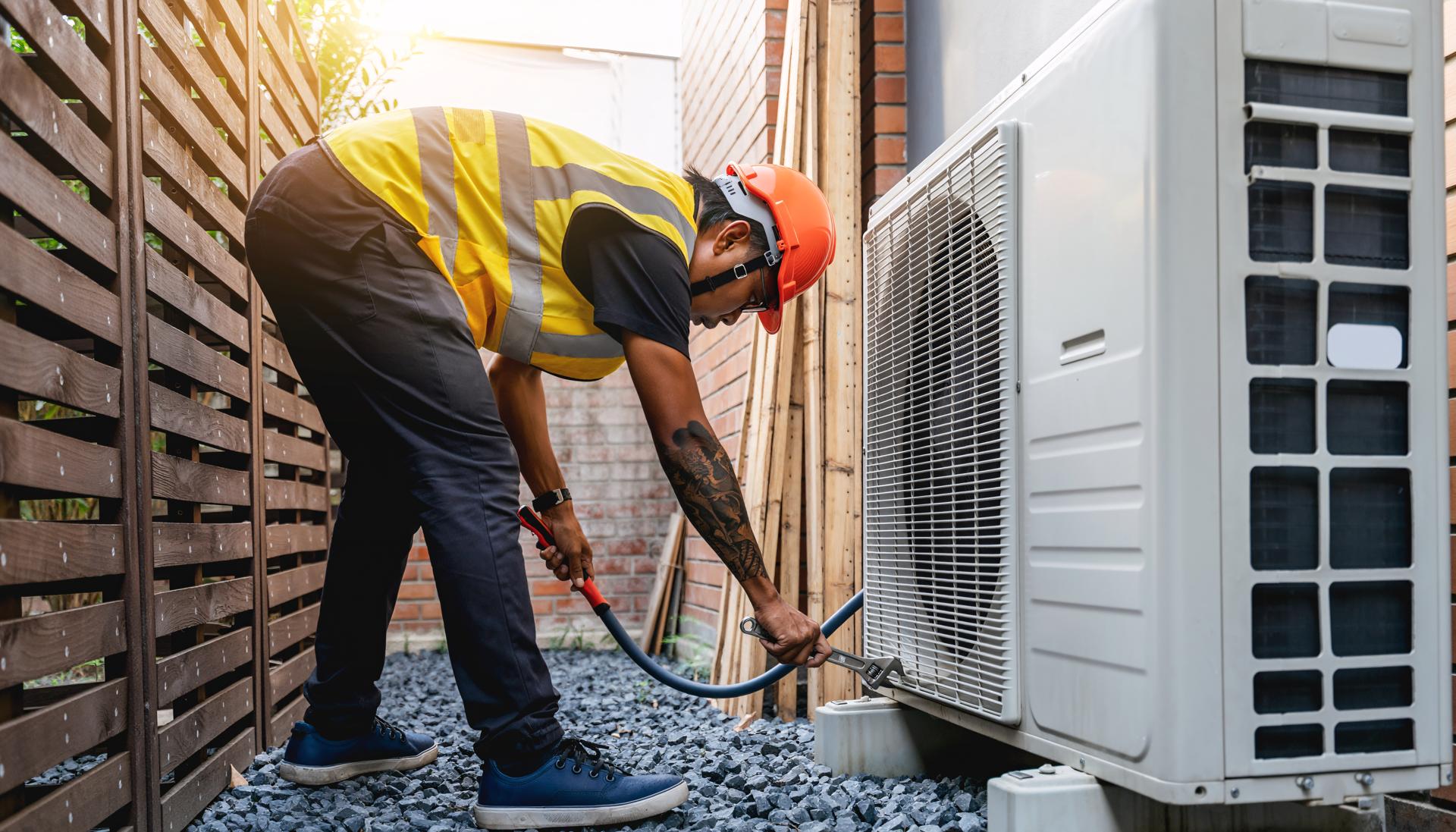
Federal rules require EPA Section 608 certification for technicians who service or install equipment in ways that could release refrigerant (including attaching gauges/hoses or charging refrigerant).
4) A quick comparison table: efficiency, comfort, and fit
| Option | Best For | Comfort Strength | Common “Gotcha” |
|---|---|---|---|
| Central AC | Homes with usable ducts | Whole-home consistency | Duct leakage / airflow issues can erase efficiency gains |
| Heat Pump | Homeowners planning for efficient heating + cooling | Steady temps, efficient operation | Must be matched to existing ductwork and heating needs |
| Ductless Mini-Split | Additions, hot rooms, no-duct homes | Zoned comfort, quiet operation | Poor placement or wrong sizing can cause drafts/short cycling |
Tip: No matter which option you choose, verify the equipment match in the AHRI directory and confirm the quoted efficiency is for the exact indoor/outdoor combo—not just the outdoor unit.
5) Step-by-step: what a quality AC installation should include
Step 1: Home evaluation (not just equipment selection)
A solid evaluation checks insulation levels, window exposure, duct condition, and electrical capacity. This is where many comfort problems are prevented—before equipment is ordered.
Step 2: Permits and inspections (when required)
In the Pikes Peak region, many HVAC projects—including air conditioning system installation or replacement—can require permitting and inspection through the regional building department. This protects homeowners by verifying work meets adopted code requirements.
If you’re unsure, it’s reasonable to ask your contractor: “Will you pull the permit and schedule the inspection?”
Step 3: Correct line-set practices and refrigerant charge
Proper evacuation, leak checks, and charging to manufacturer specs are critical. A system can be “new” and still perform poorly if charge is off.
Step 4: Airflow verification and thermostat setup
Balanced airflow helps prevent hot/cold rooms and reduces stress on the compressor. Thermostat staging and fan settings matter even more on multi-stage or variable-speed equipment.
Step 5: Maintenance plan (so your efficiency stays efficient)
Filters, coil cleanliness, and annual checks protect performance. If you want a set schedule, plan ahead for seasonal tune-ups so you’re not calling during the first heat wave.
Explore AC maintenance options (clean-and-check inspections to help prevent breakdowns)
6) Local angle: what’s unique about cooling in Colorado Springs
Colorado Springs summers can be comfortable most days—but when heat builds, the swing between afternoon sun and cooler nights can expose weak spots in duct design, thermostat strategy, and system sizing. Regional climate data shows long-term variability in average summer temperatures, underscoring why “rule-of-thumb sizing” is risky.
Practical local considerations:
• Sun exposure: West-facing rooms often need airflow tweaks or zoning strategies.
• Low humidity: Comfort is still possible at slightly higher thermostat settings—if airflow is right.
• Wildfire smoke season: If you’re sensitive to air quality, consider pairing a new AC with filtration or purification upgrades.
Indoor air quality options (air purification) to complement your cooling system.
Ready to plan an AC installation that fits your home (not a one-size quote)?
Absolute Comfort has served Colorado Springs and the Pikes Peak region since 1988, with a focus on clear options, workmanship that holds up, and recommendations that match real comfort needs.
If your system is failing now, you may also want repair options: AC repair in Colorado Springs.
FAQ: AC installation in Colorado Springs
How long does an AC installation usually take?
Many straightforward replacements can be completed in a day, but timelines vary if ductwork needs repair, electrical upgrades are required, or permits/inspections add scheduling steps.
Do I need a permit to replace my air conditioner?
In the Pikes Peak Regional Building Department jurisdiction, air conditioning system installation/replacement is listed among projects that require a permit. Your contractor should confirm requirements for your address and handle the permit/inspection process when applicable.
What SEER2 rating should I choose for Colorado Springs?
A good target depends on your budget, how long you’ll stay in the home, and whether your ducts and airflow can support the performance you’re paying for. Your contractor should explain payback in terms of real run-hours and your comfort priorities, not just a “higher is better” pitch.
Why is my quote different from my neighbor’s, even with the same square footage?
Square footage is only one piece. Orientation, insulation, window type, duct layout, and the condition of the existing system can change the load and the installation scope.
Is duct cleaning required when installing a new AC?
Not always. What matters most is that ducts are properly sized, sealed, and deliver correct airflow. If there’s visible debris, odors, or a major airflow imbalance, your contractor may recommend cleaning or repairs as part of a complete solution.
Glossary (helpful terms when comparing AC bids)
SEER2: Seasonal Energy Efficiency Ratio (updated testing metric). Higher typically means better seasonal efficiency, but installation quality strongly affects results.
EER2: An updated efficiency metric focused more on peak-load performance conditions.
Load Calculation: A method of estimating how much cooling your home needs by analyzing insulation, windows, orientation, and more (not just square footage).
AHRI Match-Up: A certified pairing of an outdoor condenser and indoor coil/air handler that verifies rated performance.
Static Pressure: The resistance your blower must push against in ductwork and filters. High static pressure can reduce airflow and comfort.
EPA Section 608 Certification: Federal certification required for technicians who work with regulated refrigerants in ways that could release refrigerant.