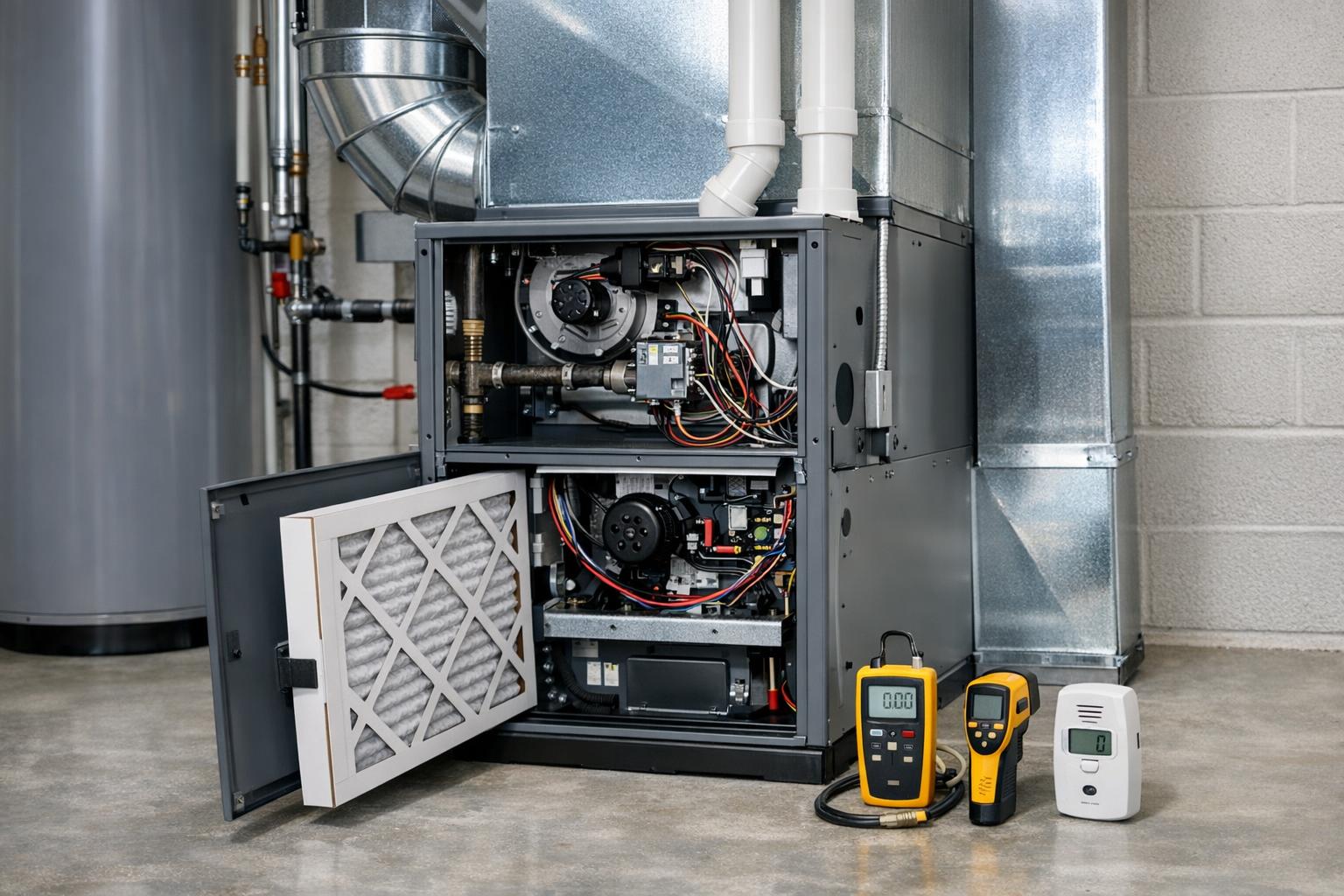
ac not turning on colorado springs

AC Not Turning On in Colorado Springs? A Homeowner’s Troubleshooting Checklist (and When to Call a Pro)

Fast checks that protect your comfort, your equipment, and your budget

When your AC won’t start, it’s tempting to assume the worst. In reality, many “AC not turning on” calls in Colorado Springs are caused by simple issues—thermostat settings, a tripped breaker, a clogged condensate drain safety switch, or a worn electrical component. This guide walks you through a safe, homeowner-friendly checklist first, then explains the most common repair-level causes and what to do next. If you’d rather skip the guesswork, Absolute Comfort has served the Pikes Peak region since 1988 with prompt, courteous technicians and options that fit real-life schedules.

Step 1: Do the safe, 5-minute checks (no tools required)

A. Thermostat settings
Mode: Set to COOL (not HEAT, OFF, or AUTO if you’re troubleshooting).
Setpoint: Set at least 3–5°F lower than the indoor temperature.
Batteries: If your thermostat uses batteries, replace them. Weak batteries can cause intermittent failures.
Schedule: Temporarily override schedules that might be raising the temperature.
B. Air filter and airflow basics
If the filter is packed with dust, replace it. Restricted airflow can contribute to freezing and safety shutoffs.
Make sure at least a few supply vents are open and unobstructed (furniture/rugs can block airflow more than you think).
C. Breakers, switches, and “simple power” issues
Breaker panel: Look for a tripped AC or furnace/air handler breaker. Flip it fully OFF, then back ON (don’t “half-reset”).
Indoor switch: Some systems have a furnace/air handler switch that looks like a light switch—make sure it’s ON.
Outdoor disconnect: Don’t open it, but confirm it hasn’t been turned OFF after yardwork or service.
If the breaker trips again quickly
Repeated trips can mean a failing capacitor, motor, compressor, or wiring issue. Avoid repeated resets—this is a “call for service” moment to prevent bigger damage.

Step 2: Identify what “not turning on” actually means

Different symptoms point to different causes. Use this quick “what you see/hear” guide:
Symptom Most likely culprit What you can do safely
Thermostat calls for cooling, but nothing happens (no indoor fan, no outdoor unit) Power issue, control issue, safety switch, or thermostat problem Check breakers, indoor switch, thermostat batteries/settings
Indoor fan runs, but outside unit is silent Outdoor disconnect/fuses, contactor, capacitor, or low-voltage control issue Confirm breakers aren’t tripped; don’t open the outdoor electrical panel
Outdoor unit hums but fan doesn’t spin Bad capacitor or fan motor (common in first warm stretch of the year) Turn system OFF to avoid motor damage; schedule repair
AC ran, then stopped; water near furnace or a “drip pan” looks full Condensate drain clog / float switch shutoff Turn system OFF; check for obvious drain line blockage and call if unsure
Tip: A clogged condensate drain can trip a safety float switch, preventing the system from running until the drain is cleared—this is a very common “AC won’t turn on” scenario.

Common repair-level causes (what a technician is usually testing)

1) Failed capacitor
Capacitors help start and run motors (compressor and condenser fan). When they weaken, you may hear humming, see the outdoor fan not spinning, or experience repeated breaker trips. Replacement requires electrical safety and proper part matching.
2) Bad contactor (or contactor coil)
The contactor is an electrical relay that sends power to the outdoor unit when the thermostat calls for cooling. Pitting, sticking, or coil failure can keep the condenser from starting—even if the thermostat and indoor blower seem fine.
3) Condensate float switch triggered
Many systems include a safety shutoff switch to prevent water damage. If the drain line is clogged (algae, debris, sediment), the switch opens the control circuit and the AC won’t run until the moisture issue is resolved.
4) Low-voltage control wiring or thermostat issue
A loose “common” wire, a damaged thermostat cable, or a failing control board can interrupt the signal that tells the outdoor unit to run. This can show up as intermittent cooling or a system that “does nothing” when set to COOL.
5) Coil freeze-up (then shutdown)
Low airflow (dirty filter, blocked return, dirty coil) can lead to ice buildup. Once frozen, performance drops sharply and the system may short-cycle or stop. If you suspect ice, turn the system OFF (or set to FAN only) and call for a proper diagnosis.

Did you know? Quick facts that save headaches

Many “no-cool” calls are really “no-power” calls. A tripped breaker, switched-off disconnect, or failed capacitor can stop everything even when the thermostat looks normal.
A clogged condensate drain can shut off the system on purpose. The float switch is there to prevent ceiling/wall damage—especially important during humid spells or heavy run times.
SEER2 is the current efficiency rating standard. Newer systems are tested under updated procedures (SEER2/EER2/HSPF2), which can help you compare replacement options more accurately if repair vs. replace comes up.

Colorado Springs angle: what makes our AC “no-start” season a little different

Along the Front Range and throughout the Pikes Peak region, a lot of AC trouble shows up during the first warm stretch after months of downtime. That’s when weak capacitors fail, contactors stick, and outdoor units reveal issues that weren’t obvious in winter.
Another local factor is outdoor debris and seasonal pollen/cottonwood, which can collect around condensers and reduce airflow. Keep at least 2 feet of clear space around the outdoor unit, and gently remove obvious debris (with the system OFF) so the condenser can breathe.
If you manage rentals or multi-unit properties, putting AC maintenance on a calendar (before peak heat) reduces emergency calls and helps systems run efficiently when demand spikes.
Prevent repeat breakdowns
Seasonal tune-ups can catch failing capacitors, dirty coils, weak electrical connections, and condensate drain issues before they turn into a “AC not turning on” day. If you want a proactive approach, see our AC maintenance options.

Need AC repair in Colorado Springs today?

If you’ve checked the thermostat and breaker, or your system is tripping power, humming, leaking water, or still won’t start, it’s time for a professional diagnosis. Absolute Comfort provides expert AC repair and clear recommendations—repair, maintenance, or replacement when it truly makes sense.

FAQ: AC not turning on (Colorado Springs homeowners ask these a lot)

Why does my thermostat look normal, but the AC won’t start?
The display can still work even if the outdoor unit isn’t getting the signal or power it needs. Common causes include a tripped breaker, a triggered float switch, a failed capacitor/contactor, or low-voltage wiring issues.
Is it safe to keep resetting the breaker?
If it trips once, you can reset it one time after checking obvious causes. If it trips again, stop. Repeated trips can overheat components and turn a manageable repair into a major failure.
My indoor fan runs but the outdoor unit doesn’t—what does that mean?
Often it’s a condenser-side electrical issue (disconnect/fuses, contactor, capacitor) or a control signal problem. A technician will confirm whether the unit is receiving proper voltage and a cooling call.
What’s the fastest way to tell if a clogged drain is shutting my AC off?
Look for water around the indoor unit, a full drain pan, or a safety switch on/near the drain line. If you suspect a backup, turn the system OFF and schedule service—clearing drains safely and checking for related issues is a common fix.
Should I repair or replace if my AC is older?
It depends on the failure type, system age, refrigerant type, efficiency, and the overall condition of the compressor and coils. If replacement is on the table, ask about SEER2-rated equipment and what’s realistic for your home’s size and ductwork. You can also review AC installation and AC replacement options.

Glossary (quick definitions)

Capacitor
An electrical component that helps start and run motors (like the condenser fan and compressor).
Contactor
A relay that “pulls in” when cooling is requested, allowing high-voltage power to reach the outdoor unit.
Condensate float switch
A safety switch that shuts the system off when the condensate drain backs up, helping prevent water damage.
SEER2
An updated efficiency rating used for many newer air conditioners and heat pumps, based on revised testing procedures.
Outdoor disconnect
A nearby shutoff device for the outdoor unit that allows power to be safely disconnected during service.
Want more homeowner answers? Visit our FAQ page or contact Absolute Comfort to schedule a diagnostic.

Related Posts

Accessibility Toolbar