Smiling HVAC technician working on outdoor air conditioner unit with tools

AC Tune-Up in Colorado Springs: What a Real Maintenance Visit Should Include (and What You Can Do Between Appointments)

A practical guide for homeowners who want lower summer bills and fewer breakdowns

If you’re searching for an AC tune-up in Colorado Springs, you’re probably trying to avoid the same two problems: a surprise breakdown during a hot spell and energy bills that creep up every summer. A quality tune-up is more than a quick look and a new filter—it’s a systematic check of airflow, electrical components, coil cleanliness, refrigerant performance, safety controls, and drain management so your system can handle the season ahead with less strain.
Colorado Springs summers can be deceptively demanding—warm days, cool nights, and fast-changing weather patterns encourage homeowners to “set it and forget it,” which is exactly how small issues (dirty coils, weak capacitors, poor airflow) turn into mid-season no-cool calls. The good news: most of these problems are preventable with routine maintenance and a couple of homeowner-friendly habits.

What an AC tune-up should include (step-by-step)

Here’s what a thorough maintenance visit typically covers. Your exact checklist may vary by system type (central AC, heat pump, mini-split), but the principles stay the same.
 
1) Airflow & filter evaluation
A tech should confirm the correct filter type/size, check for restrictions, and look for signs of airflow issues (dirty blower wheel, clogged return, crushed duct, etc.). ENERGY STAR recommends checking filters monthly and replacing/cleaning as needed because dirty filters force equipment to work harder and can raise costs. 
 
2) Thermostat operation & system controls
Verification that the thermostat is properly controlling the system (cooling call, fan operation, staging if applicable), and that safety/limit controls are behaving normally.
 
3) Electrical inspection (contactors, capacitors, connections)
Many summertime failures are electrical. A tune-up should include visual inspection for heat damage, tightening/inspection of electrical connections as appropriate, and testing key components that commonly weaken over time.
 
4) Condenser (outdoor unit) cleaning & coil condition
The outdoor coil has to reject heat efficiently. If it’s packed with cottonwood, dust, or grass clippings, your system runs hotter and longer. Cleaning and verifying adequate clearance around the unit are core tune-up items. ENERGY STAR also flags keeping indoor/outdoor units clean and clear as a basic performance requirement. 
 
5) Evaporator coil & blower compartment check
A dirty indoor coil can mimic “low refrigerant” symptoms and cause icing. A tech should look for dirt buildup, condensation issues, and signs of biological growth or airflow restriction.
 
6) Condensate drain inspection
Clogged drains can cause water damage or shut the system down (if you have a float switch). A tune-up should include clearing/confirming proper drainage and checking the drain pan condition.
 
7) Refrigerant performance check (not “topping off”)
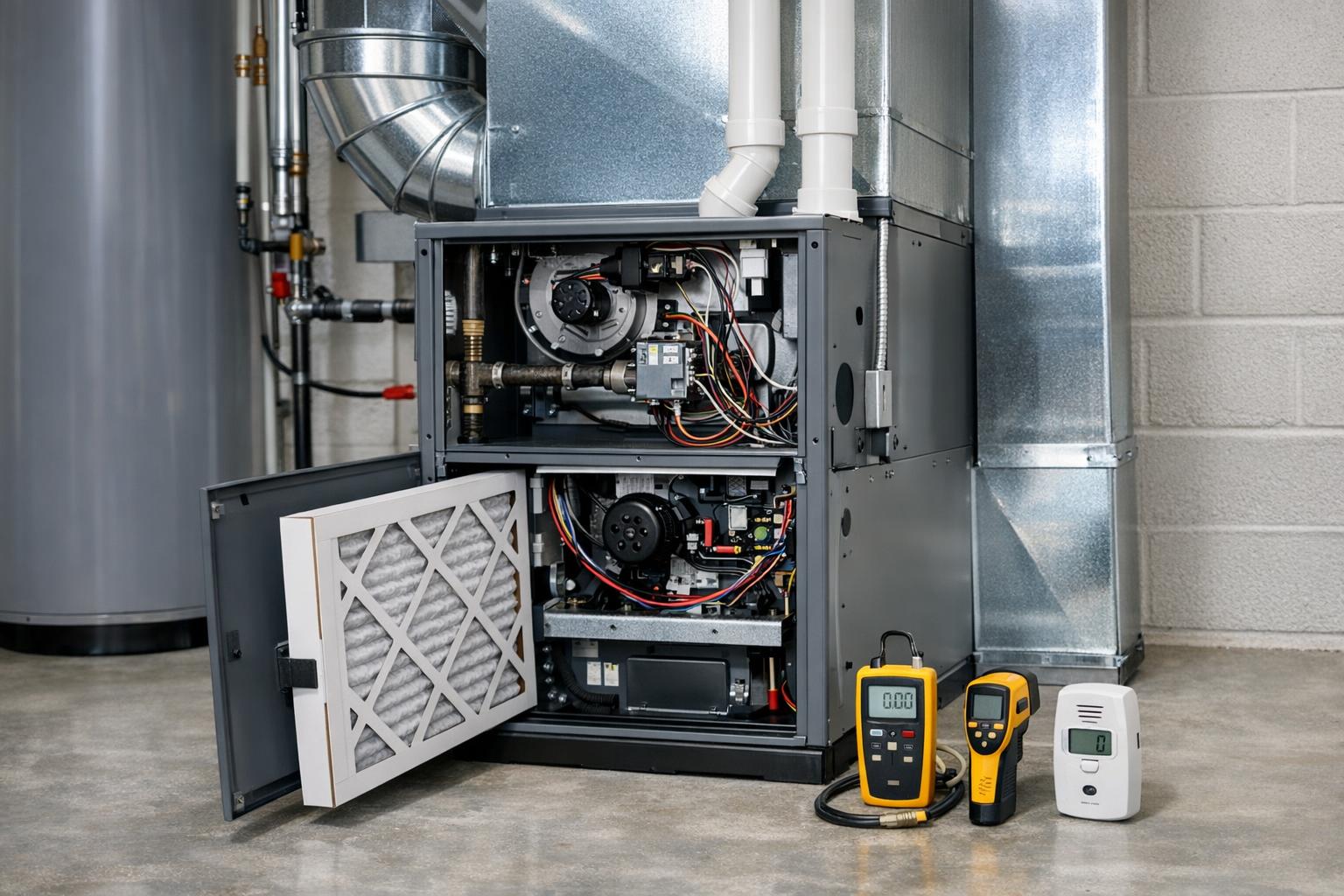
A responsible visit focuses on measurements (pressures/temps/superheat/subcool where applicable) and overall system performance. Refrigerant is not “used up”—if it’s low, there’s typically a leak that should be addressed.
 
Tip: If a “tune-up” sounds like it’s only a filter change and a quick visual glance, it may not be enough to catch the common failure points that show up on the first hot week.

What you can safely do yourself between tune-ups

Homeowners can make a measurable impact with a few low-risk habits:
 
Change/check the air filter regularly: ENERGY STAR suggests checking monthly. If you have pets, allergies, or lots of dust, you may need more frequent changes. 
Keep the outdoor unit clear: Remove leaves, grass clippings, and debris; maintain a clear “breathing zone” around the condenser so it can reject heat effectively. 
Watch for early warning signs: Longer run times, warm air from vents, unusual noises, or a musty odor can signal airflow or drain problems before they become breakdowns.
Keep supply/return vents open: Closing too many vents can create pressure problems and reduce comfort in other parts of the home.
 
Leave to a licensed pro: refrigerant work, electrical repairs inside the equipment, coil removal/chemical cleaning, and performance diagnostics that require specialized instruments.

Did you know? Quick facts that help you plan maintenance

Colorado Springs’ typical July high is about 86.5°F. That’s enough to push neglected systems into longer run cycles and expose weak parts early in the season. 
Filter neglect is a common efficiency killer. ENERGY STAR notes dirt and neglect are top causes of HVAC failure/inefficiency and recommends pre-season checkups. 
Refrigerant rules are changing, but service is still available. EPA guidance around the HFC phasedown includes labeling/reporting requirements for certain components and encourages the industry shift toward lower-GWP refrigerants in new equipment categories. If your system uses R-410A, it can still be serviced properly—what matters most is accurate diagnostics and leak prevention. 

Quick comparison table: DIY vs. professional tune-up tasks

Task DIY-friendly? Why it matters
Replace/check filter Yes Supports airflow, comfort, and efficiency; helps prevent icing and strain.
Clear debris around the condenser Yes Improves heat rejection; reduces run time.
Flush/clear condensate drain Sometimes Prevents clogs, water damage, and safety shutdowns.
Electrical testing (capacitor/contactor) No High-voltage risk; weak parts often fail under peak heat load.
Refrigerant diagnostics No Requires specialized tools, training, and compliance; “low” typically indicates a leak.

The local angle: Colorado Springs tune-up timing and common stress points

In the Pikes Peak region, the best time to schedule maintenance is typically before the first sustained warm stretch. Once the weather turns, contractors’ schedules fill quickly, and minor issues can turn into urgent calls.


Local homes also deal with factors that make tune-ups especially valuable:

 
High-contrast weather: Bigger swings between day/night can lead to frequent cycling, which stresses starting components.
Dust and debris: Dry spells and wind can load filters faster, reducing airflow and comfort.
Heat spikes: Even if average highs are moderate, record-setting days happen, and they expose weak electrical components quickly. 
 

If your system is older, you’ve recently remodeled (extra dust), or you notice uneven temperatures, a tune-up plus airflow check can be one of the most cost-effective ways to improve comfort without jumping straight to replacement.

Schedule your AC tune-up with Absolute Comfort

Absolute Comfort has served Colorado Springs and the Pikes Peak region since 1988. If you want a tune-up that focuses on performance, reliability, and long-term system health (not just a quick once-over), our team is ready to help.

FAQ: AC tune-ups in Colorado Springs

How often should I schedule an AC tune-up?
Most homeowners benefit from an annual pre-season cooling check. ENERGY STAR recommends scheduling pre-season checkups (cooling in spring, heating in fall) to help prevent failures and inefficiency. 
Will a tune-up lower my energy bill?
It can. The biggest savings typically come from restoring airflow (clean filter/coil, proper fan performance) and preventing the system from running hotter or longer than necessary due to dirt or restricted heat transfer.
Is refrigerant “top-off” part of a tune-up?
Refrigerant isn’t a consumable. If it’s low, there’s usually a leak or an underlying issue that needs correction. A quality tune-up checks performance and identifies problems—then recommends the right repair path.
What’s the #1 thing I can do right now to help my AC?
Check your air filter and replace it if it’s dirty. ENERGY STAR recommends checking monthly, and a clean filter supports airflow and efficiency. 
How do I know whether I need maintenance or repair?
Maintenance is best when the system is working, but you want peak performance and fewer surprises. If you’re getting warm air, frequent cycling, unusual noises, ice on the lines, or water around the unit, that’s more consistent with repair and diagnostics.
 
For more service answers, visit our site’s FAQ page: HVAC FAQs.

Glossary (helpful HVAC terms)

Condenser coil: The outdoor coil that releases heat from your home to the outside air.
Evaporator coil: The indoor coil that absorbs heat from your home’s air; a common place for dirt buildup and icing issues.
Capacitor: An electrical component that helps motors start and run; weak capacitors can cause hard starts or no-cool events.
Contactor: An electrical switch that sends power to the outdoor unit when cooling is called.
Condensate drain: The drain line that carries away moisture removed from the air; clogs can cause leaks or system shutdowns.
HFC phasedown: A U.S. policy process that reduces high-global-warming-potential refrigerants over time and accelerates the transition to lower-GWP options in new equipment categories. 
 
Want help deciding what your system needs this season? Contact Absolute Comfort to schedule service in Colorado Springs and the surrounding Pikes Peak region.

Related Posts

Accessibility Toolbar