
September 5, 2026
Protect comfort, efficiency, and safety before Colorado’s next temperature swing A heating system inspection is more than a quick look at your furnace. In...
As winter settles over Colorado Springs, the demand for reliable hot water becomes more critical than ever. Tankless water heaters are renowned for their on-demand efficiency, but the frigid temperatures and unique water conditions of the Pikes Peak region present specific challenges. Proactive winter maintenance is the key to ensuring your unit operates at peak performance, avoids costly breakdowns, and delivers consistent hot water through the coldest months. This guide provides essential tips to extend your tankless water heater’s lifespan and maintain its energy-saving benefits.
Tankless water heaters face a tougher job in winter. The incoming groundwater temperature drops significantly, meaning the unit must work harder and use more energy to reach your desired hot water setting. This increased workload can strain components and amplify the effects of any existing issues, like mineral buildup. For residents in Colorado Springs, where hard water is common, this mineral scaling can severely reduce efficiency and even lead to system failure if left unaddressed. Furthermore, the risk of freezing pipes and internal components is a serious threat that can cause catastrophic damage. Proper maintenance mitigates these risks, ensuring reliability when you need it most.
Follow these steps to prepare your system for the demands of a Colorado winter. While some tasks can be handled by a diligent homeowner, complex procedures like descaling are often best left to a professional.
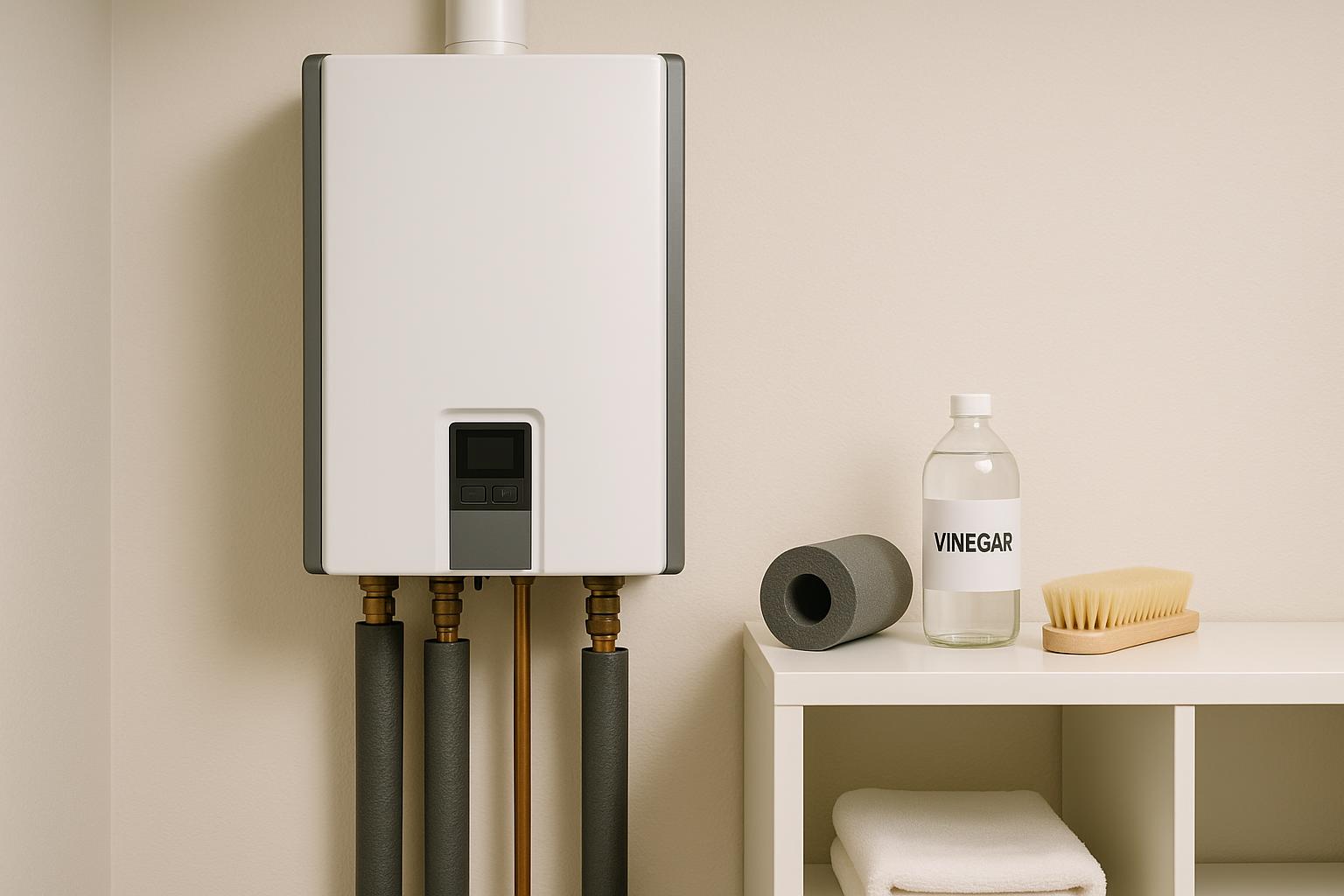
One of the most effective and straightforward ways to prevent freezing is to insulate any water pipes connected to your unit that are exposed to cold air, especially those in unheated areas like garages, basements, or crawl spaces. Using foam pipe sleeves or heat tape provides a critical barrier against freezing temperatures, protecting your system from burst pipes and ensuring water keeps flowing.
Hard water, prevalent in our region, leaves behind mineral deposits (limescale) inside the heat exchanger. This buildup forces your unit to work harder, reduces efficiency, and can lead to component failure. Descaling, or flushing the system with a non-toxic solution like vinegar, removes this buildup. Manufacturers typically recommend this service annually. Given the complexity and need for specific equipment, scheduling professional water heater maintenance is the safest and most effective approach.
Tankless units require unobstructed airflow for proper combustion and safety. Before winter storms arrive, check and clear the intake and exhaust vents of any debris, such as leaves, nests, or snow and ice buildup. Blocked vents can cause the system to shut down or operate inefficiently, and in worst-case scenarios, lead to dangerous carbon monoxide buildup.
Most tankless water heaters have a small screen filter on the water inlet to catch sediment and debris. A clogged filter can restrict water flow, causing temperature fluctuations and reducing performance. Check your owner’s manual for the filter’s location, and carefully remove and clean it with a soft brush under running water.
While homeowners can perform basic tasks, a comprehensive tune-up requires technical expertise. This table outlines which tasks you can tackle and when to call in the experts at Absolute Comfort.
| Maintenance Task | Recommended for DIY | When to Call a Professional |
|---|---|---|
| Inspecting and clearing vents | ✔️ | If you suspect an internal blockage or animal nesting. |
| Cleaning the inlet water filter | ✔️ | If the filter is damaged or water flow doesn’t improve. |
| Insulating exterior pipes | ✔️ | For complex pipe layouts or applying heat tape. |
| System descaling (flushing) | ❌ | Annually, or biennially for homes with water softeners. |
| Inspecting internal components | ❌ | During your annual professional tune-up. |
Since 1988, Absolute Comfort has been the local heating and cooling company that residents trust. We understand the specific challenges our climate poses for HVAC and water heating systems. Our technicians provide thorough heating maintenance services, ensuring that your entire home is prepared for winter, not just your water heater. From conventional furnaces to advanced boiler systems and energy-efficient tankless units, we have the expertise to keep your home warm and efficient.
Don’t wait for a cold-water surprise on a frosty morning. Schedule your professional tankless water heater maintenance with Absolute Comfort and enjoy peace of mind all winter long.
It is recommended to have your unit professionally serviced at least once a year. In areas like Colorado Springs with hard water, annual descaling is crucial for maintaining efficiency and longevity. Homes with a water softening system might be able to extend this to every 18-24 months.
Common signs include fluctuating water temperatures, a decrease in water pressure, the unit shutting off unexpectedly, unusual noises like rumbling or clunking, or seeing error codes on the display. If you notice any of these, it’s time to call a professional.
Yes, it can, especially if it’s installed in an unheated space or if there’s a prolonged power outage, as most built-in freeze protection systems require electricity to function. Proper insulation of the unit and its pipes is the best defense against freezing.
Absolutely. Mineral scale acts as an insulator on the heat exchanger, forcing the unit to use more energy to heat the water. Over time, this leads to higher utility bills, reduced performance, and can cause permanent damage to the unit. Routine descaling is one of the most important aspects of energy-efficient water heater maintenance.
Protect comfort, efficiency, and safety before Colorado’s next temperature swing A heating system inspection is more than a quick look at your furnace. In...
A smart checklist for Pikes Peak homes where cooling costs jump fast If your electric bill spikes when the AC runs, it usually isn’t...
Fast, calm troubleshooting for hot nights, warm airflow, and sudden AC shutdowns When your air conditioner fails after hours, it’s not just uncomfortable—Colorado Springs...