

September 20, 2026
A practical guide for homeowners who want safer heat, fewer breakdowns, and better efficiency Colorado Springs heating season can feel like it flips on...
When the temperatures drop in the Pikes Peak region, a reliable heating system isn’t just a luxury—it’s essential. For homeowners in Colorado Springs, deciding on the right way to heat your home involves weighing factors like comfort, cost, and efficiency. Two of the most common and effective options are traditional forced-air furnaces and modern radiant heating systems. While both will keep your home warm, they operate on completely different principles, each offering unique benefits.
Understanding the distinction between these two powerful home heating services is the first step toward making an informed choice that suits your lifestyle, budget, and the specific needs of your Colorado home. This guide will break down how each system works, their pros and cons, and help you determine the best fit for ensuring your family’s comfort through our cold, dry winters.
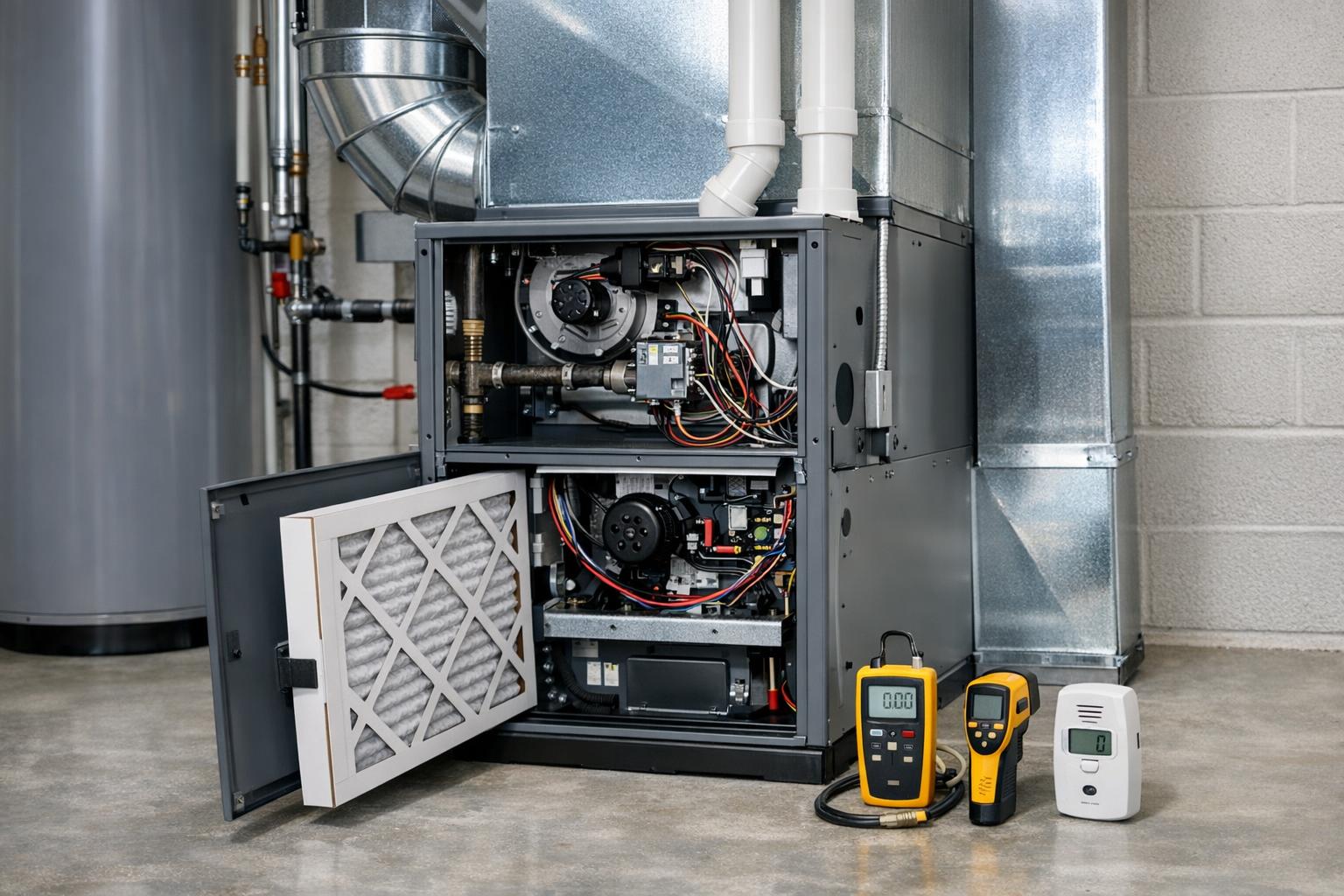
The forced-air furnace is the most common heating system in North American homes. These systems generate heat at a central unit and distribute it throughout the house via a network of ducts and vents. Here’s a simple breakdown of the process:
This cycle continues until your home reaches the desired temperature. Because they share ductwork, furnaces are often integrated with central air conditioning systems, providing a year-round climate control solution. If you ever face issues with this process, expert furnace services can diagnose and fix the problem efficiently.
Radiant heating works more like the sun. Instead of heating the air, it directly warms the objects and people in a room through infrared radiation. This heat emanates from surfaces—most commonly the floors—to create a consistent and enveloping warmth. It’s a fundamentally different approach that many find more comfortable.
Because radiant heat warms you directly, you often feel comfortable at a lower thermostat setting, leading to potential energy savings. Explore the possibilities of this cozy technology with expert radiant heating system installation.
| Feature | Traditional Furnace | Radiant Heating |
|---|---|---|
| Comfort Quality | Heats air, which can create drafts and uneven temperatures (hot/cold spots). | Provides consistent, even warmth from the floor up. Silent operation with no drafts. |
| Energy Efficiency | Modern furnaces are highly efficient, but some energy can be lost through ductwork. | Typically more efficient as there is no heat loss from ducts. Can feel warmer at lower temperatures. |
| Indoor Air Quality | Can circulate dust, allergens, and other airborne particles through ducts. Requires regular filter changes. | Excellent for air quality as it doesn’t move air, beneficial for allergy sufferers. Ideal for improving indoor air quality. |
| Installation Cost | Lower upfront cost, especially if ductwork is already in place. | Higher initial installation cost, particularly for retrofitting into an existing home. |
| Response Time | Heats a space very quickly. | Slower to heat up and cool down, as it needs to warm the entire floor mass. |
| System Integration | Easily integrates with central AC, humidifiers, and air purification systems. | Requires a separate system for air conditioning. |
The unique climate in Colorado Springs—with its cold, dry winters and significant daily temperature shifts—plays a big role in this decision. Here are some local considerations:
Whether you’re leaning toward the rapid response of a high-efficiency furnace or the luxurious comfort of radiant heat, the experts at Absolute Comfort can help. As a local company serving Colorado Springs since 1988, we have the expertise to assess your home’s unique needs and recommend the perfect system. We’re here to provide professional installation, maintenance, and repair to keep you warm all winter.
Yes, radiant heating can be retrofitted into existing homes. While it’s most easily installed during new construction or major renovations, there are “dry” installation methods where tubing is fitted between the joists from below. Electric mat systems are also relatively easy to add under new flooring in a single room. The project’s complexity depends on your home’s structure.
Radiant heating works well with most flooring types, but some are better conductors of heat than others. Tile, stone, and concrete are excellent choices. Engineered hardwood and laminate are also good options. While you can use carpet, it should be thin with a dense pad to allow heat to transfer effectively.
Forced-air furnaces require more regular maintenance, including monthly filter changes and annual professional tune-ups to keep the blower, burners, and ductwork clean and safe. A professional heating maintenance check is crucial. Radiant systems generally require less upkeep, mainly consisting of annual inspections of the boiler and pumps for hydronic systems.
While furnaces circulate dry air, you can integrate a whole-home humidifier into your existing HVAC system. This adds necessary moisture to the air as it’s distributed, combating the dryness common in Colorado Springs winters and improving overall comfort.
AFUE (Annual Fuel Utilization Efficiency): A percentage that measures how efficiently a furnace converts fuel into heating energy for your home. A higher AFUE rating means greater efficiency.
Forced-Air System: A heating system that uses a blower to circulate air through a network of ducts to heat a space.
Heat Exchanger: The component in a furnace that heats the air. It separates the combustion gas from the breathable air being circulated in your home.
Hydronic System: A heating system that uses hot water or another liquid to move heat from a boiler to distribution points like radiators or sub-floor tubing.
Infrared Radiation: A type of energy transfer where heat is emitted in the form of electromagnetic waves, warming objects and people directly without heating the air in between.
Radiant Heating: A method of heating that warms surfaces (like floors, walls, or ceilings), which then radiate heat to the occupants and objects in the room.
A practical guide for homeowners who want safer heat, fewer breakdowns, and better efficiency Colorado Springs heating season can feel like it flips on...
Protect comfort, efficiency, and safety before Colorado’s next temperature swing A heating system inspection is more than a quick look at your furnace. In...
Why your air conditioner won’t stop—and what it often means for comfort, energy use, and system health If you’re searching “AC running constantly Colorado...