
September 20, 2026
A practical guide for homeowners who want safer heat, fewer breakdowns, and better efficiency Colorado Springs heating season can feel like it flips on...
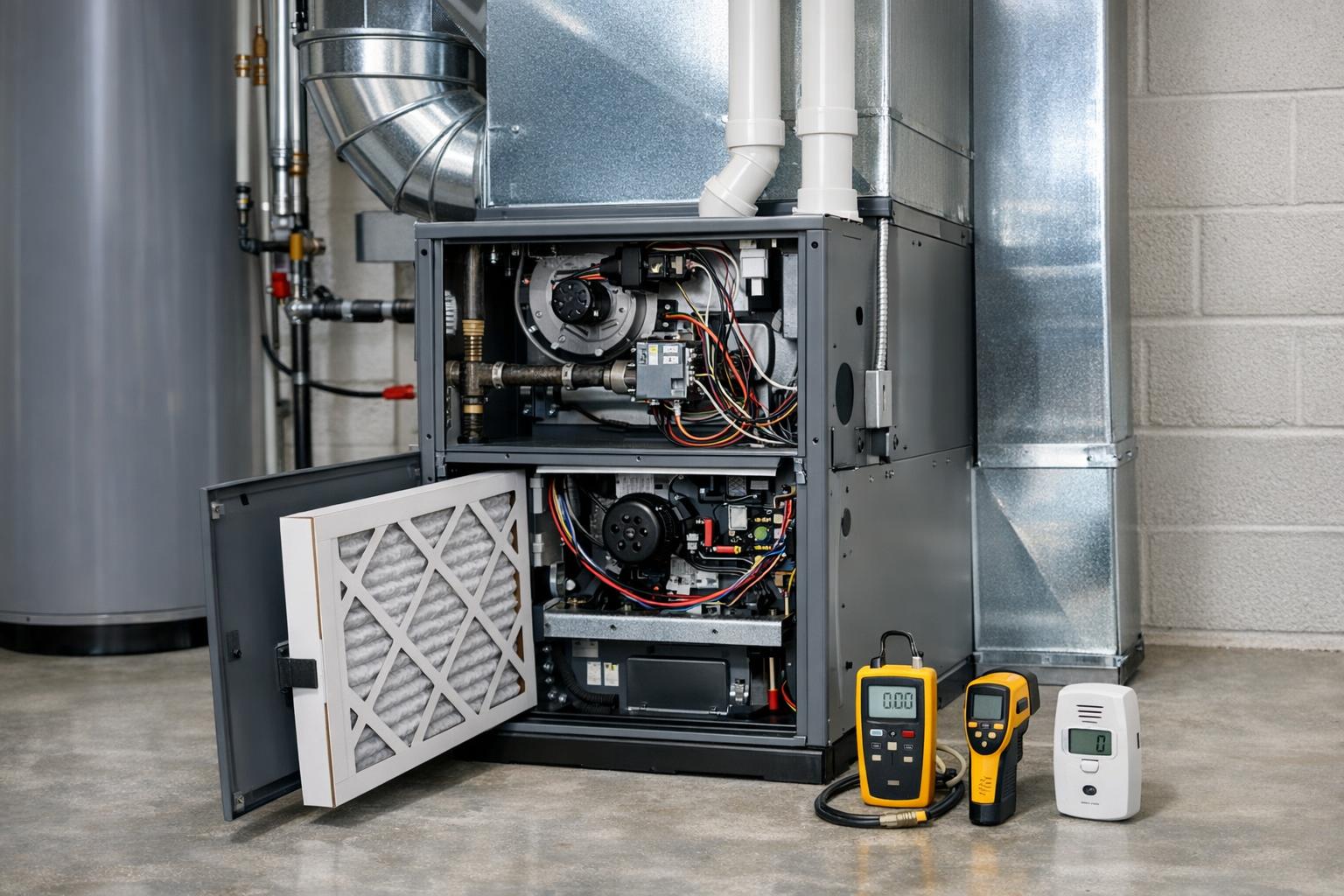
When your furnace starts then shuts off before the house ever warms up, you are looking at a different problem than a furnace that will not run at all. The burners light. You hear the blower. Then something interrupts the sequence, and the system quits, sometimes after a few seconds, sometimes after a few minutes. Homeowners usually find this page by asking Why does my furnace keep shutting off, and the honest answer is that the furnace is almost always doing it on purpose.
That distinction matters for what you do next. If your furnace is completely dead and the house is dropping into the fifties, our emergency guide for when your heater fails is the faster read, and it covers the immediate steps. This page is for the furnace that keeps trying and cannot finish. At Absolute Comfort, this is the call that fills the schedule during the first hard freeze in Colorado Springs, and the causes fall into a short, predictable list.
A modern gas furnace does not simply turn on. It runs a supervised startup sequence, and it checks its own work at every stage. Simplified, that sequence looks like this: the thermostat calls for heat, the inducer motor starts and pulls air through the heat exchanger, a pressure switch confirms that the draft is actually moving, the igniter heats up, the gas valve opens, a flame sensor confirms that gas is truly burning, and only then does the blower start pushing warm air into the house.
Every one of those confirmations is a place the sequence can stop. If a switch does not close, or a sensor cannot prove what it is supposed to prove, or a safety limit decides the furnace is getting too hot, the control board shuts the gas off. It is not being temperamental. It is refusing to burn gas in conditions it cannot verify as safe.
So a furnace that starts and quits is telling you one of two things. Either a proof device or a safety limit is interrupting the cycle, which is a fault to find and repair, or the furnace is satisfying the thermostat so fast that it never needs a long cycle, which is a sizing problem rather than a broken part. Those two lead to completely different conversations, and the timing of the shutdown usually tells you which one you have.
In the trade, this is called short cycling. A furnace short cycles when it runs noticeably shorter cycles than the weather calls for, or when it repeatedly lights and drops out without completing a cycle at all.
For rough context, a correctly matched furnace in mild fall weather often runs somewhere in the range of ten to fifteen minutes per cycle, and it runs longer and less often as outdoor temperatures fall. In deep cold, long cycles are normal and healthy. What is not normal is a furnace firing every few minutes, or one that lights, drops, lights, drops, and then goes quiet for an extended stretch.
Short cycling is worth chasing down even when the house is technically staying warm enough. Frequent starts are the hardest part of the cycle on ignition components, and a furnace that is repeatedly tripping a safety limit is repeatedly heating and cooling a heat exchanger in a way it was not designed for. Homeowners searching for furnace short cycling in Colorado Springs often assume it is a nuisance. It is more often an early warning.
Before anyone opens a panel, the single most useful piece of information is how long the furnace runs before it stops, and what is still running after it stops. Stand near the furnace through two full attempts and note the timing. That one observation narrows five possible causes down to one or two.
| What you observe | What it usually points to | Who should handle it |
| Burners light, then drop out after roughly three to five seconds. Repeats a few times, then the furnace goes silent for a long stretch. | Flame is not being proven. Most often a dirty or failing flame sensor. | Homeowner cleaning is possible; service call if it returns |
| Runs one to three minutes, then stops. You may hear the inducer motor running or clicking on and off. | A pressure switch is opening. Usually a venting, condensate, or inducer issue. | Service call |
| Runs five to fifteen minutes and gets hot, burners cut out, but the blower keeps running afterward. | The high limit switch is tripping on restricted airflow. | Check the filter first, then service call |
| Burners light and burn unevenly, drop out irregularly, or the flame looks lazy and yellow rather than mostly blue. | A gas supply or gas valve problem, or a combustion setup issue. | Service call, licensed technician only |
| Complete but short cycles. The house does reach temperature. No error codes, and it has behaved this way since installation. | The furnace is oversized for the house. | Assessment at replacement time |
Most furnaces built in the last twenty years also blink a diagnostic code on a small LED behind the access panel, and the legend for that code is usually printed on the inside of the door. Writing down the blink pattern before you call is one of the most useful sixty seconds you can spend.
The order below is not arbitrary. It runs from most common and least expensive to least common and most involved, which is roughly the order an experienced technician works through as well.
The flame sensor is a thin metal rod that sits in the burner flame and confirms that gas is actually burning. It works by passing a very small electrical current through the flame itself, so any insulating film on the rod interferes with the reading. Over a season or two, that rod picks up a light oxide and residue coating, the current drops below the threshold the control board needs, and the board concludes there is no flame even though the burners lit normally. The result is the three- to five-second light-and-drop pattern, repeated for a set number of attempts before the furnace locks out. This is the most common single cause of a furnace that starts and shuts off, and it is often resolved by carefully cleaning the sensor.
The pressure switch is a safety device that confirms the inducer motor is genuinely moving exhaust gases out of the heat exchanger. If it cannot confirm draft, it will not allow the gas valve to open, and if it loses that confirmation mid-cycle, it shuts the burners down. Common triggers include a blocked or snow-covered vent termination, a cracked or disconnected rubber sensing hose, a clogged condensate drain or trap on a high-efficiency furnace, and an inducer motor that is weakening with age. The tell is a furnace that runs briefly and then stops with the inducer still working. This one is a service call because the switch is usually reporting a real venting problem rather than failing on its own.
The high limit switch watches the temperature inside the furnace and cuts the burners if the heat exchanger gets hotter than its design allows. It almost never trips because the furnace is producing too much heat. It trips because not enough air is moving through to carry that heat away. The classic signature is burners that cut out after five to fifteen minutes of good heat while the blower keeps running to cool things down. Start with the filter, since a clogged filter is the single most common cause, and our guide on when to replace your furnace filter covers the timing. Closed or blocked supply registers, furniture over a return grille, crushed flex duct, and a failing blower motor produce the same result. Repeated limit tripping over years of runtime is hard on a heat exchanger, so this is worth resolving rather than living with.
Less often, the interruption is on the fuel side. A gas valve can weaken or fail intermittently, gas pressure can be set incorrectly, and a shared supply can sag when another large appliance fires. What you tend to notice is a flame that looks lazy, uneven, or more yellow than blue, or burners that drop out without any consistent timing. This is licensed technician work without exception. Gas pressure and valve service require a manometer, combustion testing, and a license, and it is not a category where a homeowner should experiment. If you ever smell gas, leave the house first and call from outside. If burning gas is being disturbed rather than simply interrupted, read our carbon monoxide safety guide for Colorado homeowners and make sure you have working detectors on every level.
An oversized furnace produces more heat than the house can absorb, so it drives the thermostat to its setpoint quickly and shuts off before it has really settled into a steady state. Then the house cools, and it fires again. Nothing is broken, which is exactly what makes this frustrating to diagnose. The tells are consistency and cleanliness: full cycles rather than aborted ones, a house that does reach temperature, no diagnostic codes, and a history of doing this since the day it was installed. There is no repair for oversizing. It gets corrected with a proper load calculation at replacement time, which is why sizing deserves real attention when the furnace is eventually replaced.
Before calling, there are a few checks that are genuinely safe, genuinely useful, and occasionally solve the problem outright.
That list is deliberately short. Everything past it involves gas, high voltage, or components whose failure has safety consequences.
Some symptoms should end troubleshooting immediately:
Repeated lockouts are not something to wait out. Each one is the furnace telling you it could not confirm a safety condition, and the underlying cause tends to get worse rather than stabilize. If you are trying to decide whether to repair now or plan a replacement, our breakdown of heating repair costs in Colorado Springs lays out how those decisions get weighed.
Most of what causes a furnace to cycle on and off is preventable, and the prevention is unglamorous.
Change the filter on a schedule rather than when you remember, and check it monthly during heating season if you have pets or an active construction area nearby. Book an annual tune-up before the first freeze rather than during it, because a heating maintenance visit is when a flame sensor gets cleaned, a pressure switch gets tested, and a condensate trap gets flushed before any of them strand you. Keep registers open and unobstructed year-round. Walk your vent terminations after storms. If your furnace has short-cycled since the day it went in, raise sizing with your contractor well before you are replacing it in an emergency, since emergency replacements are when sizing shortcuts happen.
For a wider view of what tends to go wrong once temperatures drop, our overview of common HVAC issues in winter covers the rest of the season.
For a short period while you arrange service, usually yes, because the furnace is shutting down precisely to stay within safe limits. It is not safe to keep resetting a furnace that locks out repeatedly over days or weeks. Stop immediately and call if there is any gas smell, any carbon monoxide alarm, visible soot, or a yellow rolling flame.
In mild weather, ten to fifteen minutes per cycle is a reasonable general range, and cycles get longer and less frequent as it gets colder outside. In sustained deep cold, a furnace running for very long stretches is normal and is not a fault. The concern is the opposite pattern: many short bursts per hour, or cycles that abort before the blower ever delivers real heat.
Yes, and it is one of the most common causes we find. A clogged filter starves the blower of return air, heat builds up inside the furnace faster than it can be carried away, and the high limit switch cuts the burners to protect the heat exchanger. The giveaway is burners stopping while the blower continues to run.
That is a lockout. Most control boards allow a set number of ignition attempts, commonly three, before locking out for a timed period rather than continuing to cycle gas. The exact count and lockout duration vary by manufacturer and are listed in the documentation inside the access panel. A lockout is a symptom of a failed proof step, most often flame sensing, and the count itself is not the problem.
It can. Equipment set up to sea-level specifications does not behave the same way at over six thousand feet, and combustion and airflow are both affected by thinner air. It is worth having a technician confirm that your furnace was configured for this elevation, particularly if the unit was installed by someone unfamiliar with the local market or if it has never run quite right since installation.
A furnace that lights and quits is a solvable problem, and it is usually a small one caught early. Note the timing, note the blink code, check the filter and the registers, and you will either fix it in twenty minutes or hand a technician most of the diagnosis before they arrive. What you should not do is keep resetting it through a cold snap and hope it settles, because every one of those causes gets more expensive the longer it runs.
If the cycle will not hold after the basic checks, our team handles furnace and heating repair throughout Colorado Springs and the surrounding communities, and we will tell you plainly whether you are looking at a cleaning, a part, or a sizing conversation. Get in touch with Absolute Comfort, and we will get someone out to look at it.
A practical guide for homeowners who want safer heat, fewer breakdowns, and better efficiency Colorado Springs heating season can feel like it flips on...
Navigation ▼ Regain Control of Your Home’s Comfort 5 Common Signs Your Thermostat Is Failing DIY Checks vs. Professional Repair The Colorado Springs Climate...
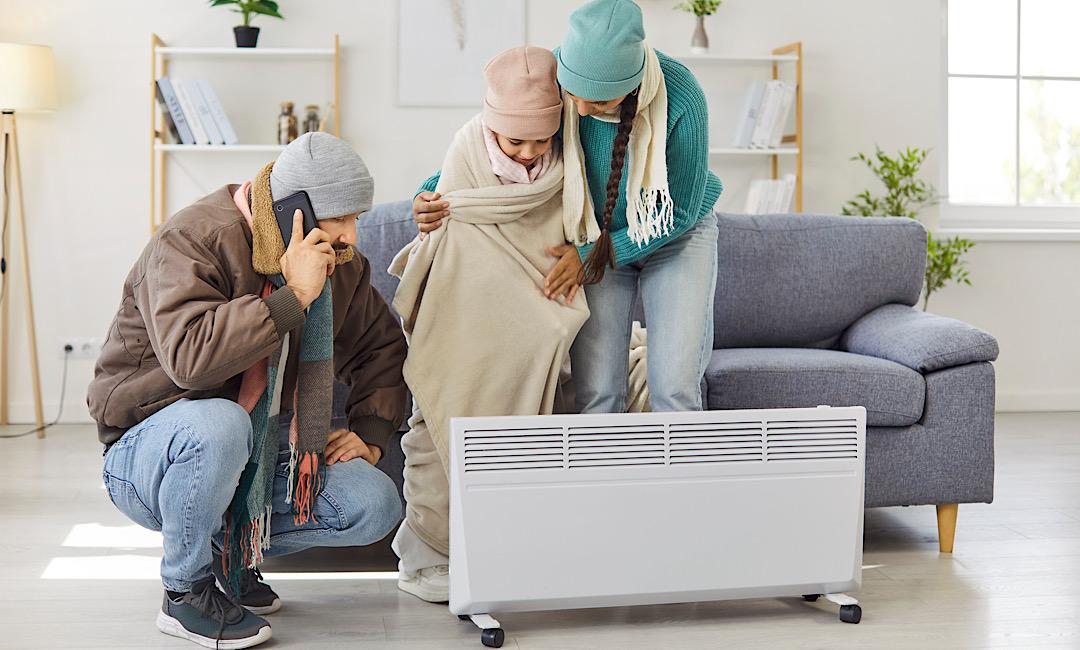
Navigation ▼ Sudden Heater Failure? Don’t Panic. Here’s Your Action Plan. Need Emergency Heating Repair in Colorado Springs? Frequently Asked Questions Glossary of Terms...